Characters| Floria Tosca | A celebrated songstress |
|---|
| Mario Cavaradossi | Painter and lover of Tosca |
|---|
| Baron Scarpia | Chief of Police |
|---|
| Cesare Angelotti | Political prisoner and escapee of the Castel Sant'Angelo Prison |
|---|
| The Sacristan | |
|---|
| Spoletta | Police Agent |
|---|
| Sciarrone | Gendarme |
|---|
| A Prison Guard | |
|---|
| A shepherd boy | |
|---|

Tosca 2006

Tosca 2006

Tosca 2006

Tosca 2006

Tosca 2006

Tosca 2006

Tosca 2006

Tosca 2006

Tosca 2006

Tosca 2006

Tosca 2006

Tosca 2006

Tosca 2006

Tosca 2006

Tosca 2006

Tosca 2006

Tosca 2006

Tosca 2006

Tosca 2006

Tosca 2006
Tosca 2006
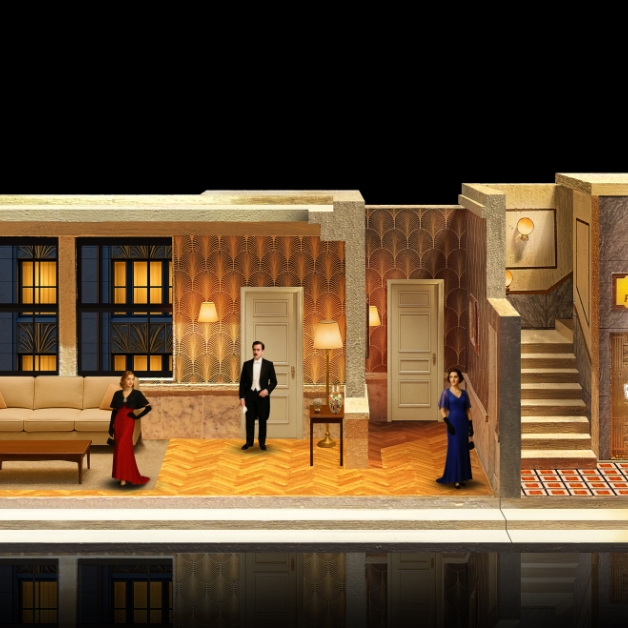
The sculpture of Castel Sant'Angelo dominates the scene
Tosca 2006
Act 1 - Angelotti (Marco Spotti) and Cavaradossi (Marcelo Alvarez)
Tosca 2006
Act 1 - Tosca (Fiorenza Cedolins) e Cavaradossi (Marcelo Alvarez)
Tosca 2006
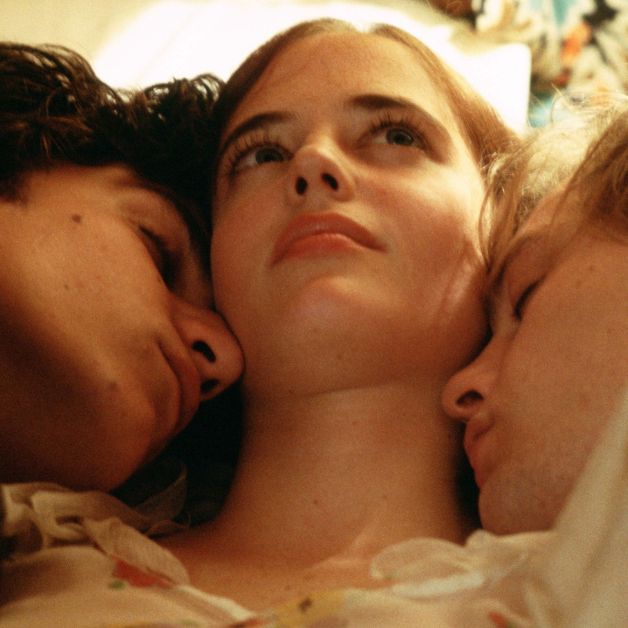
Act 1 - Cavaradossi (Marcelo Alvarez) and Floria Tosca (Fiorenza Cedolins) share a moment of intimaci
Tosca 2006
Act 1 - Barone Scarpia (Ruggero Raimondi) when he finds the marquise Attavanti's fan
Tosca 2006
Act I - Tosca (Fiorenza Cedolins) e Scarpia (Ruggero Raimondi)
Tosca 2006
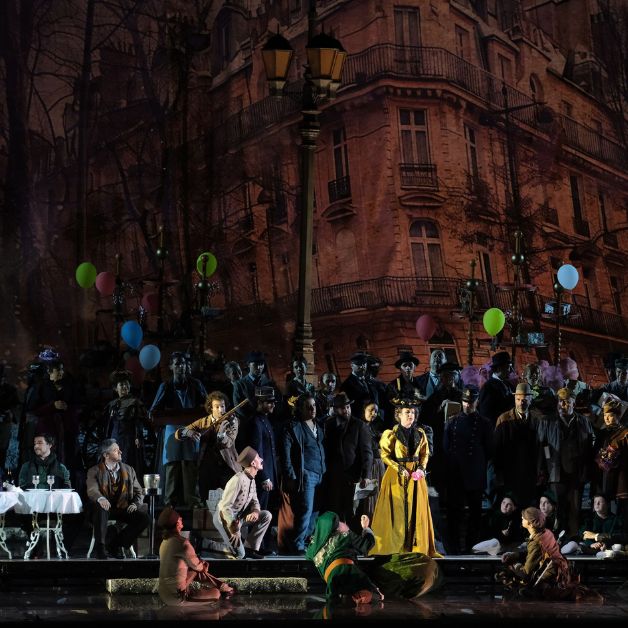
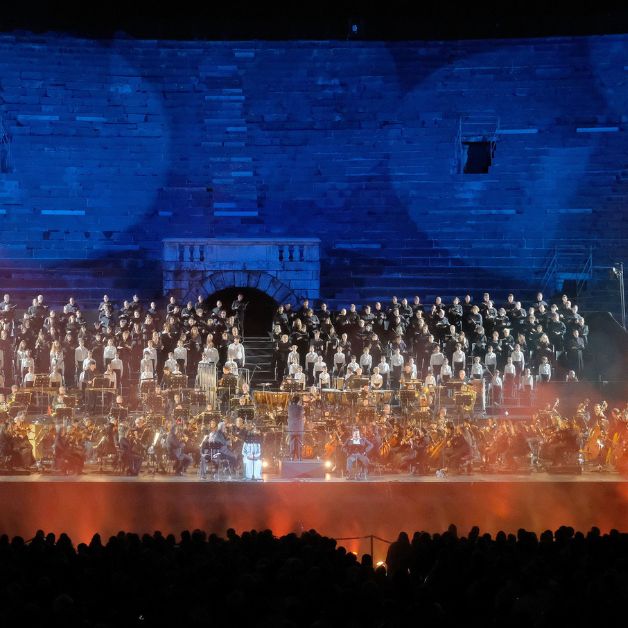
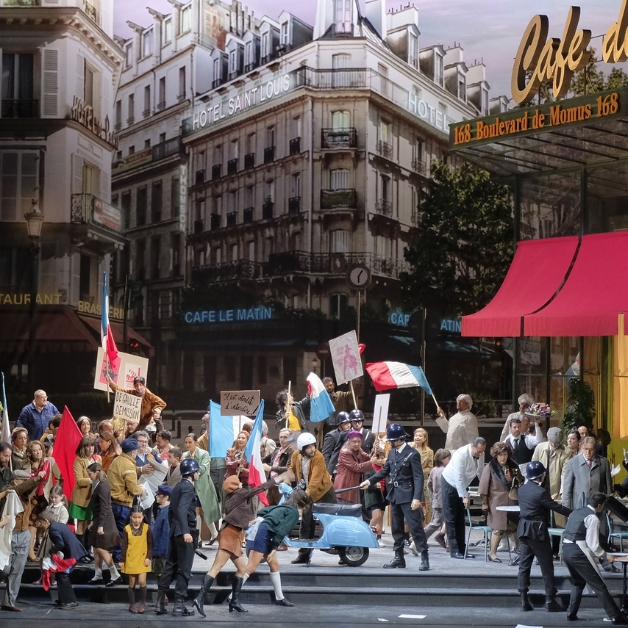
Act 1 - The Te Deum Ceremony
Tosca 2006
Act 1 - The treble voice choir sings the Te Deum
Tosca 2006
Act 1 - Te Deum
Tosca 2006
Act 2 - Cavaradossi during his interrogation
Tosca 2006
Act 2 - Cavaradossi (Marcelo Alvarez) in the hands of the police
Tosca 2006
Act 2 - Baron Scarpia convinces Tosca to reveal Angelotti's hiding place
Tosca 2006
Act II - Tosca (Fiorenza Cedolins) e Scarpia (Ruggero Raimondi)
Tosca 2006
Act II - Tosca and Scarpia
Tosca 2006
Act II - Tosca (Fiorenza Cedolins) and Scarpia (Ruggero Raimondi)
Tosca 2006
Act II - Scarpia grabs Tosca
Tosca 2006
Act I - Tosca aids Cavaradossi after he has been tortured
Tosca 2006
Act II - Tosca (Fiorenza Cedolins) embraces Cavaradossi (Marcelo Alvarez) and denies having revealed anything
Tosca 2006
Act 3 - Cavaradossi's execution
Tosca 2006
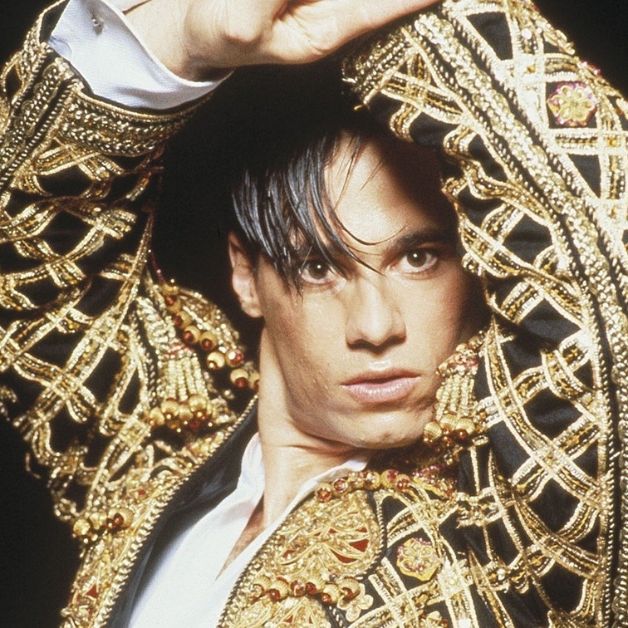
Tosca's (Fiorenza Cedolins) elegant costume in act two
Tosca: the most controversial and yet the most loved of Puccini's operas 
Back in the spring of 1889, Giacomo Puccini expressed to his publisher Ricordi his desire to tackle the then-popular French play La Tosca by Victorien Sardou for his next opera. The play had been written for the great Sarah Bernhardt, who played the part of Tosca in the première in Paris in November 1887, and whom Puccini saw perform the role in Milan in 1890 and again in Florence in 1895.
It appears that for many years after his initial, fervent letter to Ricordi, Puccini shelved the idea of La Tosca as a suitable operatic subject. It was maybe due to the fact that for some time Puccini seriously doubted whether this melodrama suited him at all.
Indeed, it was not until one year after he saw the play for the second time in Florence that he again became intrigued by the idea. By this time, however, a problem had arisen: Sardou had granted the rights to the play to Alberto Franchetti, a relatively minor composer and a nearly complete libretto had been written by Luigi Illica; also Verdi had given the work his stamp of approval. When Ricordi and Illica set out to dissuade him from the project, Franchetti surprisingly put up little resistance and Sardou actually seemed quite anxious to provide Puccini with a subject. The versification was entrusted to Giuseppe Giacosa, who was initially against the project, arguing that there was too much plot and too little room for lyrical expansion. On various occasions he threatened to withdraw from their partnership. He didn't however and by the beginning of 1898 Puccini had the entire libretto in his hands and was able to start work on the first act.
With the aim of inserting authentic local flavour into his music, Puccini made a special journey to Rome especially to hear for himself the effect of the matins bells from the ramparts of the Castel Sant'Angelo (for the introduction in Act III) and to enlist the aid of a priest who could fill him in on details of the liturgy for the Te Deum that concludes Act I. The Roman poet and librarian Luigi Zanazzo, provided suitable verses for the pastoral song sung by the little shepherd at the beginning of Act III. Puccini made certain changes to the libretto before it was completed in 1899. For example he rejected an aria to be sung by Cavaradossi in Act II and insisted on choosing a lover's anguished lament built around the words 'Muoio disperato' to be sung by the painter while he awaits his execution.
Back in the spring of 1889, Giacomo Puccini expressed to his publisher Ricordi his desire to tackle the then-popular French play La Tosca by Victorien Sardou for his next opera. The play had been written for the great Sarah Bernhardt, who played the part of Tosca in the première in Paris in November 1887, and whom Puccini saw perform the role in Milan in 1890 and again in Florence in 1895.
It appears that for many years after his initial, fervent letter to Ricordi, Puccini shelved the idea of La Tosca as a suitable operatic subject. It was maybe due to the fact that for some time Puccini seriously doubted whether this melodrama suited him at all.
Indeed, it was not until one year after he saw the play for the second time in Florence that he again became intrigued by the idea. By this time, however, a problem had arisen: Sardou had granted the rights to the play to Alberto Franchetti, a relatively minor composer and a nearly complete libretto had been written by Luigi Illica; also Verdi had given the work his stamp of approval. When Ricordi and Illica set out to dissuade him from the project, Franchetti surprisingly put up little resistance and Sardou actually seemed quite anxious to provide Puccini with a subject. The versification was entrusted to Giuseppe Giacosa, who was initially against the project, arguing that there was too much plot and too little room for lyrical expansion. On various occasions he threatened to withdraw from their partnership. He didn't however and by the beginning of 1898 Puccini had the entire libretto in his hands and was able to start work on the first act.
With the aim of inserting authentic local flavour into his music, Puccini made a special journey to Rome especially to hear for himself the effect of the matins bells from the ramparts of the Castel Sant'Angelo (for the introduction in Act III) and to enlist the aid of a priest who could fill him in on details of the liturgy for the Te Deum that concludes Act I. The Roman poet and librarian Luigi Zanazzo, provided suitable verses for the pastoral song sung by the little shepherd at the beginning of Act III. Puccini made certain changes to the libretto before it was completed in 1899. For example he rejected an aria to be sung by Cavaradossi in Act II and insisted on choosing a lover's anguished lament built around the words 'Muoio disperato' to be sung by the painter while he awaits his execution.
Setting: Rome, June 1800
ACT ONE
In the church of Sant'Andrea della Valle
Angelotti, a political prisoner who has escaped from the Castel Sant'Angelo prison, furtively enters the Church of Sant'Andrea della Valle. Near the holy water basin he finds the key to the family vault, placed there by his sister, the Marchesa Attavanti; he seizes it, hurriedly conceals himself in the vault and waits for dusk to fall. In the meantime the Sacristan arrives and, grumbling and fuming, hastens to gather up the brushes and paints scattered around an easel. Then the painter Mario Cavaradossi arrives and prepares to add a few finishing touches to a painting of Mary Magdalene. The Sacristan comments on the strange likeness between the painting and the unknown lady seen kneeling in prayer in the Church a few days previous. Mario, silently, contrasts the beauty of the blonde-haired, blue-eyed lady in the painting with that of the woman he deeply loves, the raven-haired, dark-eyed singer, Floria Tosca.
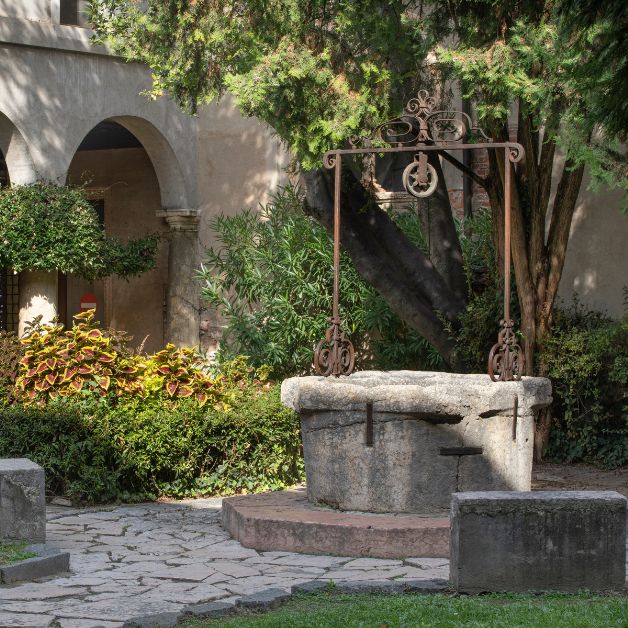
Having completed his chores, the Sacristan leaves the Church scandalized by Mario's comparison of human beings and sacred figures in his paintings. Angelotti takes this opportunity to leave his hiding place and to approach Cavaradossi, who immediately recognizes him and, finding him worn out with fatigue, offers him his help and his food basket. Their conversation is interrupted by the sudden appearance of Tosca who, noticing Mario's embarrassment, becomes suspicious. Her doubts and jealousy increase when she recognizes in the painting the likeness to the Marchesa Attavanti, portrayed unobserved by Cavaradossi when she had come to the Church to prepare her brother's escape. Mario tries to calm Tosca, expressing all his love and tenderness for her. In the end, Tosca is satisfied and leaves the Church. The painter resumes his conversation with the fugitive and offers him shelter in his villa, where there is a secret chamber in a well, in which he can hide safely. The sound of a cannon fired from Castel Sant'Angelo announces that the escape has been discovered. Cavaradossi and Angelotti quickly abandon the scene.
The Sacristan returns with choirboys and a "Te Deum" is sung to celebrate a supposed victory over Napoleon. The atmosphere of rejoicing is soon overshadowed, however, by the presence of the police and the Chief of Police, Baron Scarpia, who is conducting the enquiry into Angelotti's escape. He orders all those present to leave the Church immediately and begins his investigation.
He finds the Attavanti family vault open, sees the empty food basket, discovers a fan bearing the Marchesa's coat-of-arms and recognizes the Marchesa's face in the painting by Cavaradossi. He links this evidence with the statement made by the Sacristan, reconstructs the events and plans a course of action. In the meantime, Tosca returns to the Church and is annoyed because Mario is not there. The dissolute Baron Scarpia seizes the opportunity to vex her and increase her jealousy, with the two-fold purpose of following Angelotti's tracks and seducing her. Thinking Mario unfaithful, Tosca tearfully vows vengeance and hastens to Cavaradossi's villa to surprise him with the mistress she suspects him to be with. Scarpia gives orders to follow her. In the meantime, the congregation once again fills the Church and the scene closes with the solemn notes of the 'Te Deum'.
ACT TWO
The Farnese Palace
Scarpia is dining in a room of the palace, waiting the return of the men ordered to follow Tosca. The sound of the reception organized to celebrate the defeat of Napoleon can be heard through the open window. Spoletta arrives and breathlessly announces that, having failed to find any trace of Angelotti, he has arrested Cavaradossi under the charge of having conspired against the State and aided the escape of the fugitive.
Scarpia subjects the painter to intense interrogation but Mario replies scornfully and firmly denies the charges.
Tosca, who is present at the reception where she has just sung, is summoned by Scarpia; she arrives quickly and, seeing Mario, rushes to embrace him. Cavaradossi whispers to her that she must not say anything and is then taken into the torture chamber. The tortures fail to make him confess. Tosca, who at first bravely holds out against Scarpia's insidious questions and repugnant offers, on hearing Mario's agonized cries, gives in and reveals the fugitive's hiding place. Scarpia then has the prisoner untied and orders Spoletta to proceed immediately to Cavaradossi's villa and arrest Angelotti, who is concealed in the well. It is clear to Mario that Tosca has revealed his secret; he curses her and collapses in a faint. He rouses himself and gives an exultant cry when the gendarme Sciarrone returns announcing that the Austrians have been beaten at Marengo. Scarpia angrily orders his men to take Cavaradossi to a prison cell to await his execution. Tosca is desperate. She begs Scarpia to spare Mario and attempts to bribe him, but the Baron says that he is not interested in money; the only reward he is prepared to accept is Tosca herself. He will save Mario only if Tosca consents to give herself to him. Spoletta suddenly interrupts the discourse to inform them that Angelotti has preferred suicide to surrender and that Calvaradossi is ready for execution. Tosca, beside herself with grief, pretends to accept Scarpia's cruel proposition. The Baron then explains that he will order a mock execution with blank ammunition, but actually gives orders to Spoletta for Cavaradossi to be shot. It is his last crime; having written out a document of safe conduct authorizing Mario and Tosca to leave the country, he advances to embrace her. Tosca stabs him with a knife, wounding him fatally, wrenches the document from his fingers and, placing candles at his head and a crucifix on his chest, slips out quietly.
ACT THREE
The terrace at the top of Castel Sant'Angelo.
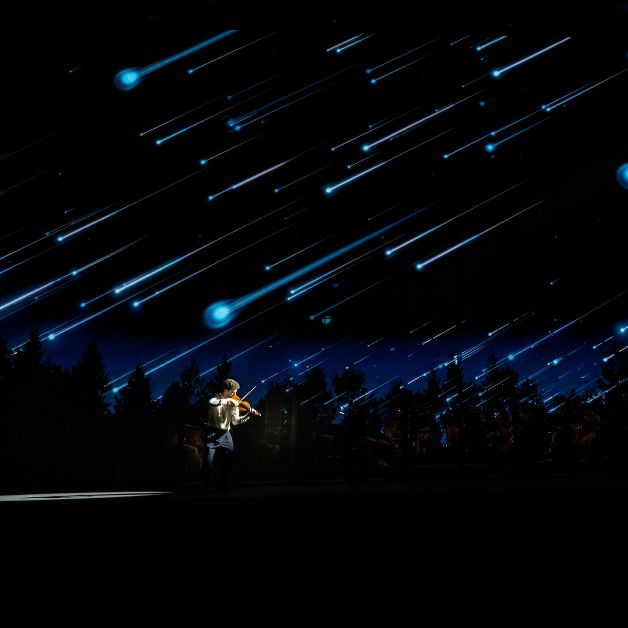
It is dawn. The Church bells are sounding the Ave Maria. A young shepherd can be heard singing, as he takes his sheep out to the pastures. A guard escorts Cavaradossi to the casemate; his last hour is approaching. Mario is writing a last desperate farewell to the world and to love. He thinks of the happy days that will never return and of the life that he is about to lose, now that he has become attached to it as never before. He wants the farewell note to be passed on to Tosca.
Suddenly Tosca enters, tells him that Scarpia is dead, shows him the document of safe conduct and warns him that he must go through a mock execution. Mario cannot believe his ears.
Tosca then confesses that she has murdered Scarpia after having made an agreement with him. She implores Mario to act the part well and to fall to the ground when the execution platoon fires. Then, when the guards have left, they will be able to flee to other lands and to live together happy and free. The execution platoon fires and Mario falls to the ground, never to rise again. When Mario fails to move, Tosca is suddenly aware of the cruel deception, that Scarpia's treachery has transcended the grave; the bullets were real. Tosca flings herself desperately on his body, horrified and unable to believe the tragedy that has struck her. In the meantime, Scarpia's men have discovered his dead body and run to seize Tosca, but she evades them and throws herself headlong over the battlements of the castle, crying that she will meet Scarpia before God.