La Traviata
Accessible opera bookletGiuseppe Verdi
La Traviata
by Giuseppe Verdi
Opera in three acts
Libretto by
Francesco Maria Piave
This is the accessible program booklet for La Traviata by Giuseppe Verdi.
It provides audio
versions of the texts, audio descriptions for the images and videos in International Sign
Language (ISL).
The texts can be easily zoomed in and out, and the contrast of the display
can be increased.
The “Audio Text” button plays the audio of the texts read by a male voice
while the “Audio Description” button plays the audio descriptions of the pictures read by a
female voice.
The “ISL” button plays videos with International Sign Language.
By using
this accessible program booklet, you give explicit consent to accessing content hosted on third
party websites.
Synopsis
Act I
Violetta Valéry is hosting a party in her luxurious apartment in Paris. She is a high-class courtesan under the protection of baron Douphol. She is introduced to an admirer, Alfredo Germont. Overcoming his initial awkwardness, the young man makes a toast to her and asks her to dance, but Violetta grows ill. She suffers from consumption, and beyond the disease itself, she harbors her own inner turmoil that detaches her from the superficiality of the party. Alfredo intuitively understands her state of mind and confesses that he has secretly been in love with her for a year. She is moved. At first, she rejects him but then gives him a flower, inviting him to return the next day. After the guests have left, Violetta contemplates the nature of her feelings.
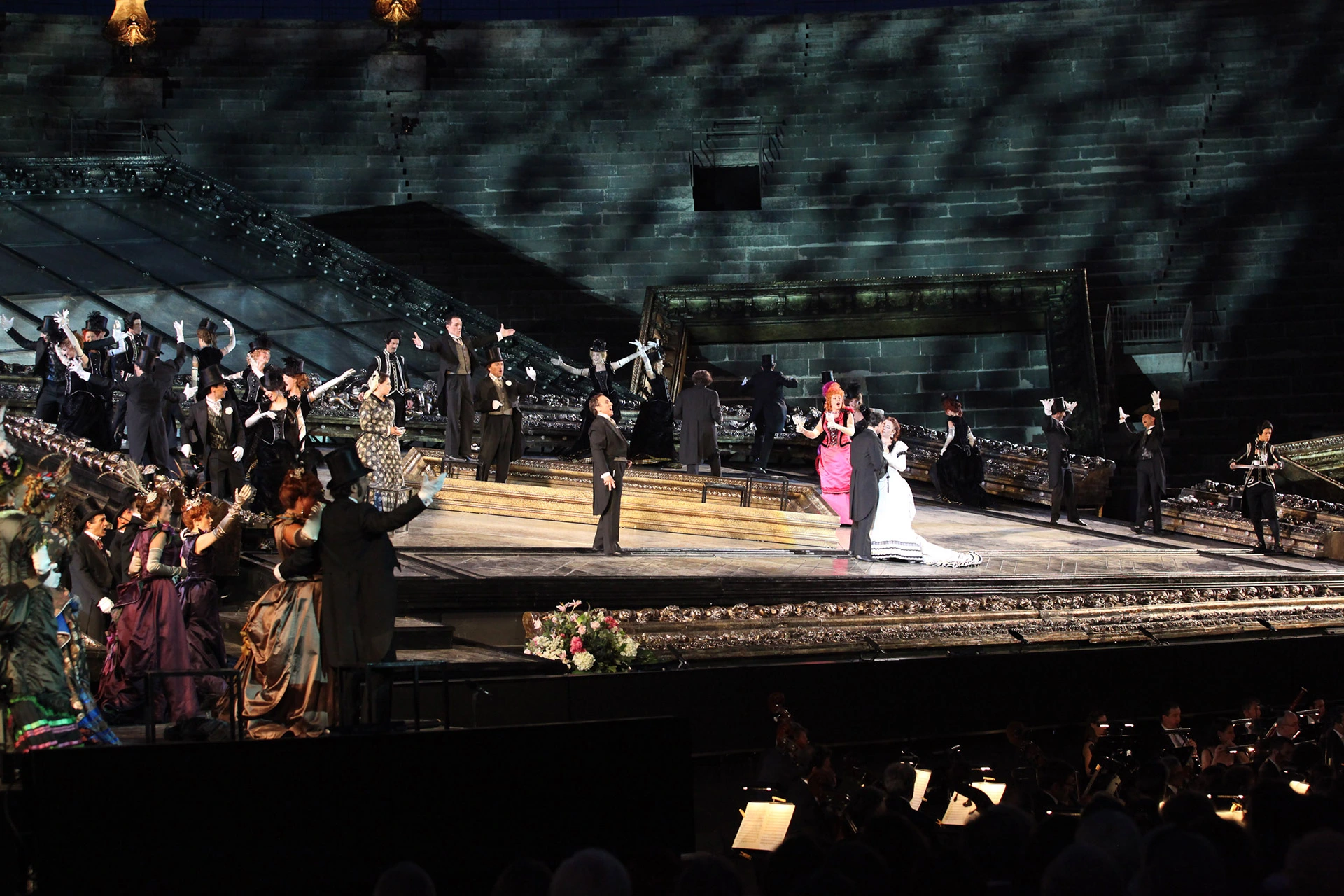
Act I
Violetta, Alfredo and some of the guests at the party held at Violetta’s
house.
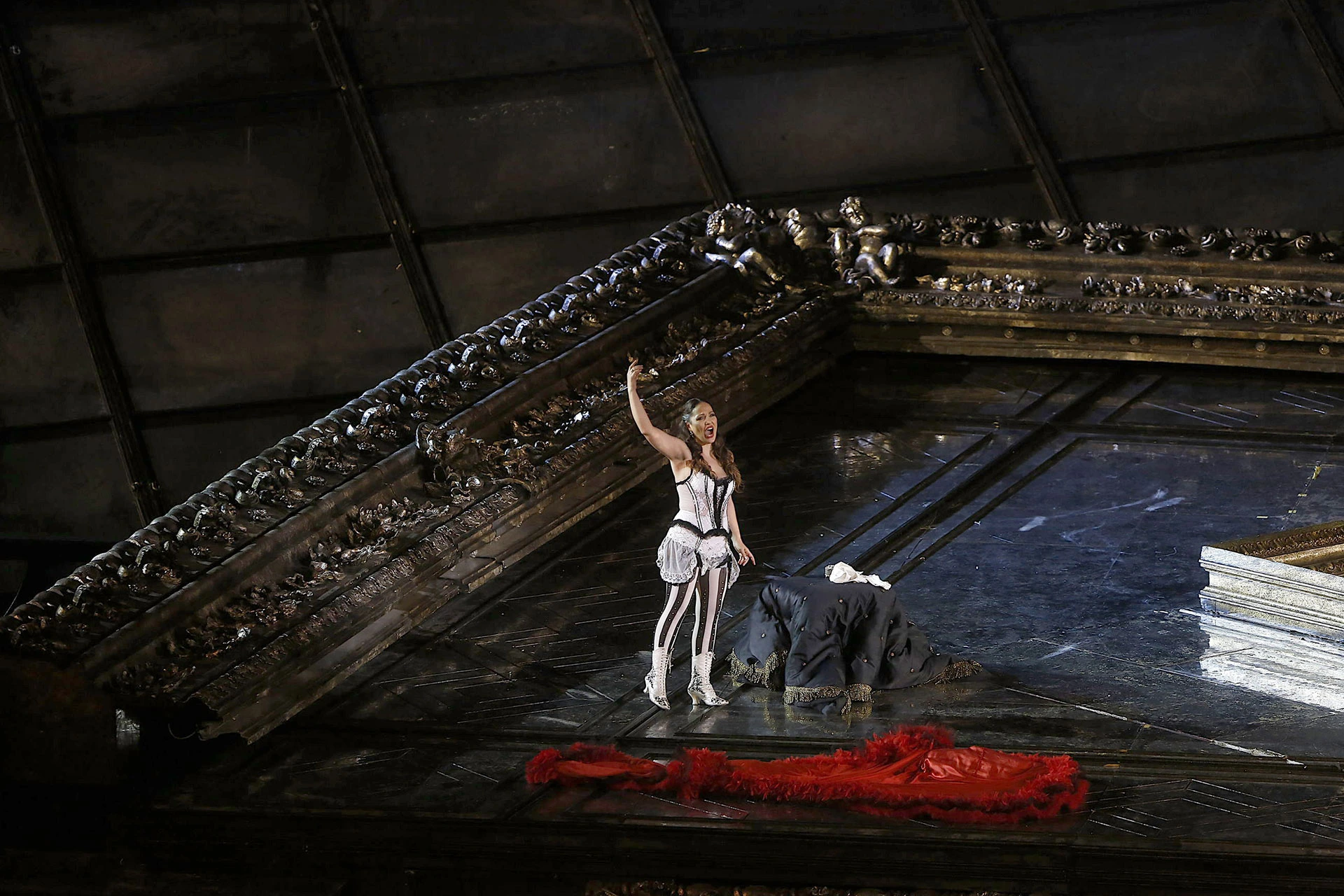
Act I
Violetta.
Act II
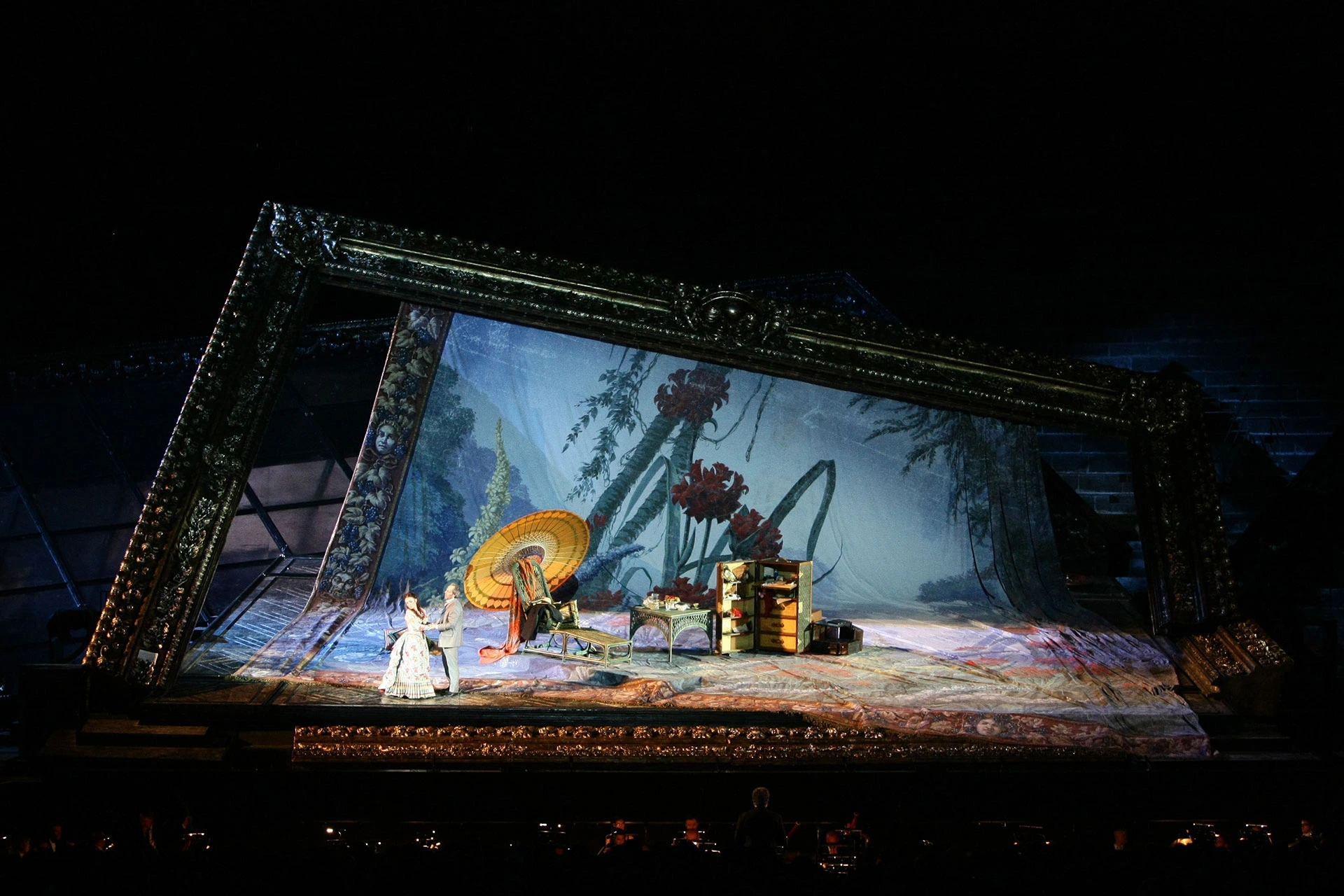
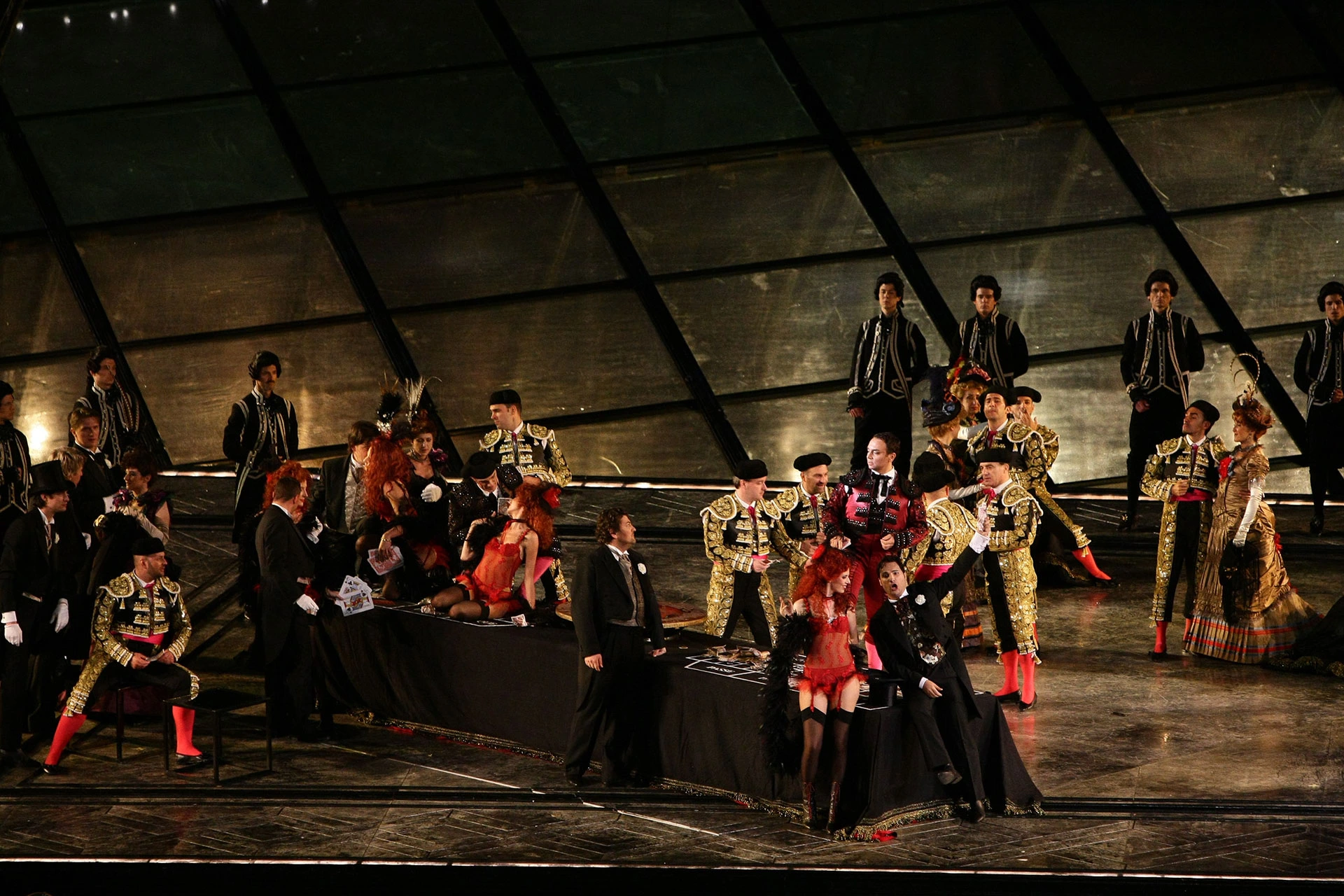
Six months later, Violetta and Alfredo are living together in a country house outside of Paris. The couple seem happy, but Violetta receives a visit from Alfredo’s father. He begs her to leave his son because the scandal of their love affair is jeopardizing his daughter’s betrothal. In the end, Violetta decides to sacrifice her own happiness and writes Alfredo a goodbye letter. Shortly thereafter, Alfredo reads the letter in which Violetta tells him that she is going to return to her life as a courtesan. Tormented by jealousy and resentment, Alfredo rushes off to find Violetta and avenge himself. That very evening, a party is being thrown at Flora Bervoix’s house. Alfredo arrives while some of the guests are playing cards. Violetta arrives as well, accompanied by Douphol. Alfredo loses control and throws his gambling winnings at Violetta. Then, filled with remorse, he is led away by his father after being challenged to a duel by Douphol.
Act II
Violetta and Germont.
Act II
Alfredo and some of the guests at the party held at Flora Bervoix's house.
Act III
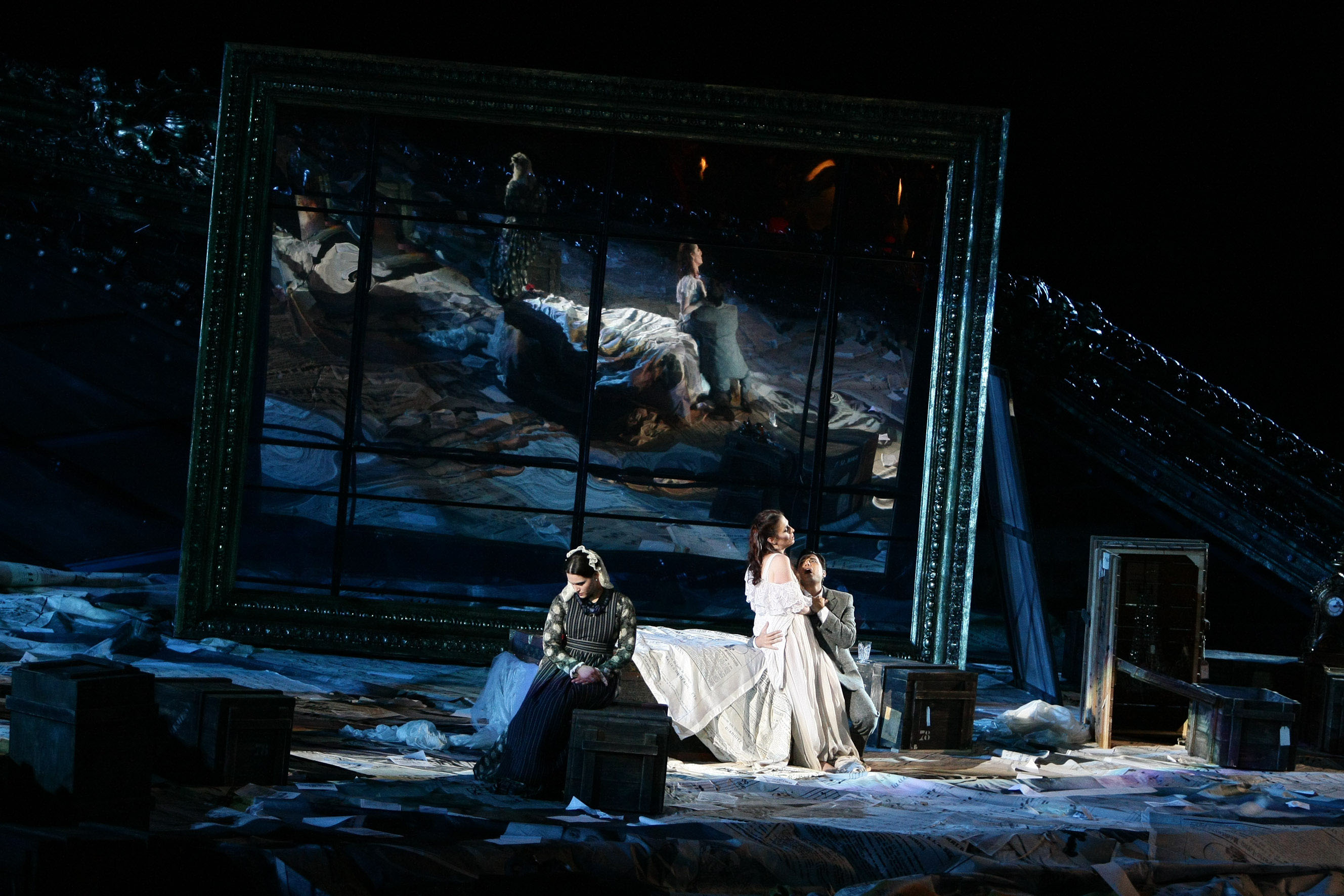
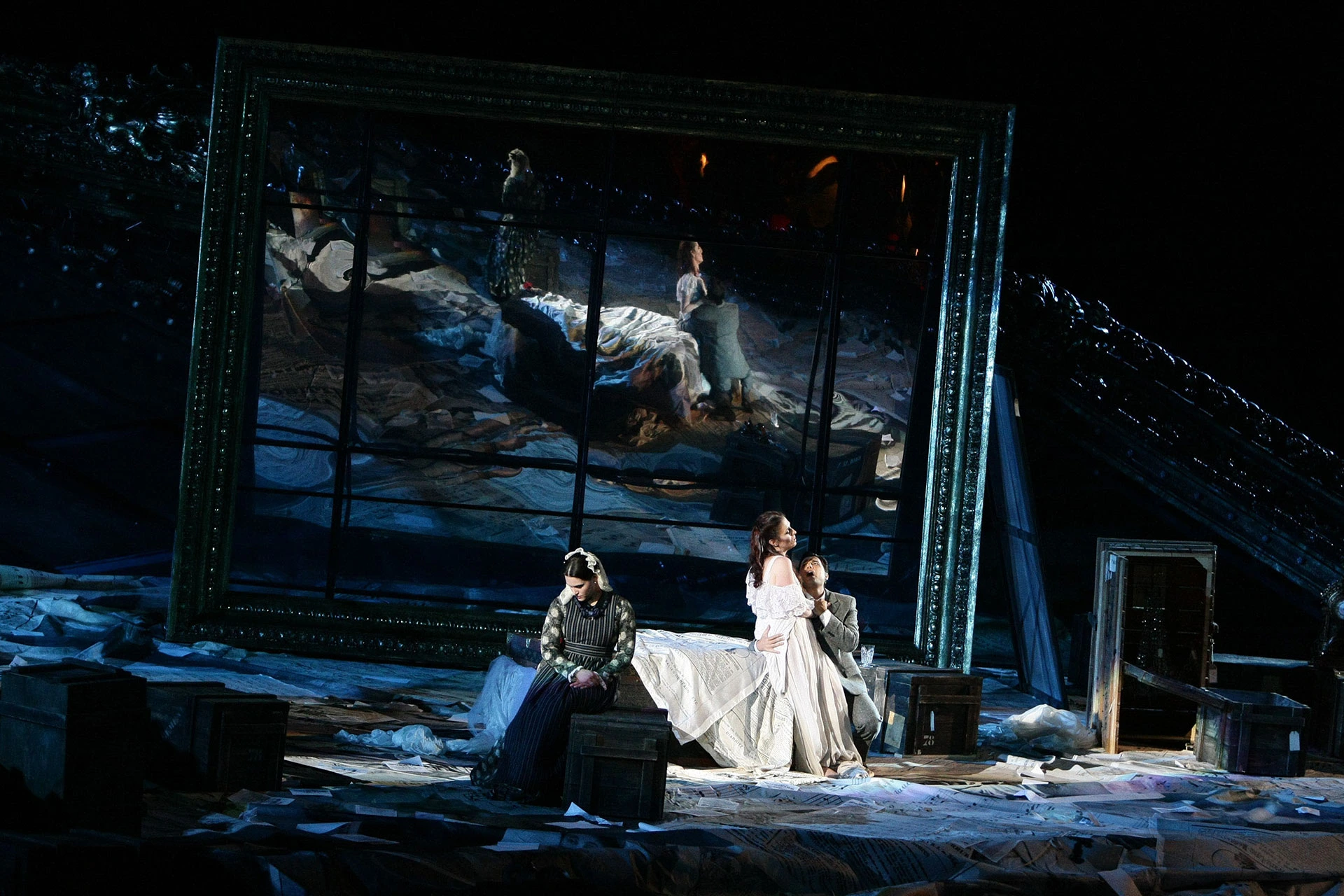
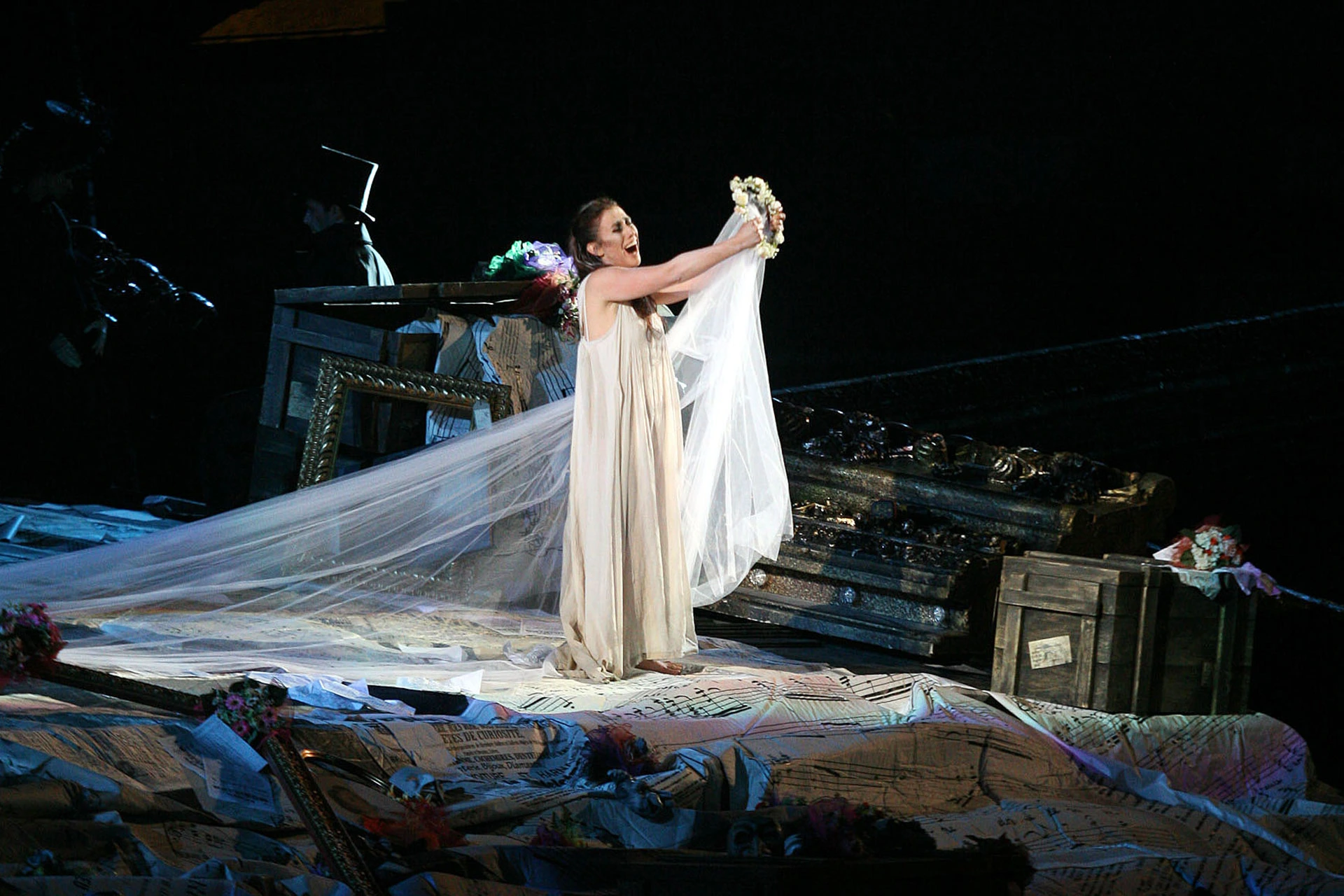
Violetta is in her bedroom, sick, a month later. Her death is at hand as doctor Grenvil confirms to Annina. Violetta is left with nothing more than simple everyday gestures, including rereading her letters. The one she dwells upon the most is the letter in which Giorgio Germont informs her that he told the truth to his son, who fled abroad after wounding the baron in the duel. Now, Alfredo is returning to Paris to see her and beg her forgiveness. When Alfredo returns, the two lovers exchange words of love and forgiveness, but now she is too weak even to stand. The arrival of Giorgio Germont, ready to accept Violetta as his daughter, and Alfredo’s words of passionate dedication are to no avail. Then after a final, fleeting sign of recovery, Violetta collapses lifeless.
Act III
Violetta, Alfredo and Annina.
Act 3
Violetta.
CHARACTERS
Flora Bervoix, friend of Violetta [mezzo-soprano]
Annina, Violetta's maid [mezzo-soprano]
Alfredo Germont [tenor]
Giorgio Germont, father of Alfredo [baritone]
Gastone, Visconte di Letorières [tenor]
Barone Douphol [baritone]
Marchese d'Obigny [bass]
Doctor Grenvil [bass]
Giuseppe, Violetta's servant [tenor]
Flora’s servant/Commissioner [bass]
Violetta’s and Flora’s male and female friends, matadors, picadors, gypsies, Violetta’s and
Flora’s servants, and masked performers
Director’s Notes
The director Hugo de Ana designed the scenes, costumes and lighting for this opera set in Paris in 1890, a flourishing period which was also marked by the moral crisis of a society that often confused love and convenience. Despite the choice of a specific time period, the setting could also represent another epoch since it is like an art gallery being dismantled, with large empty picture frames, disassembled mirrors and painting canvases. These scenic elements serve not only to fill the enormous spaces in the Arena, but also to symbolize the world of the lead character, Violetta, as it is full and empty at the same time. As regards the costumes in the style of the period, the inspiration springs from a nineteenth-century portrait of the dying Lady of the Camellias, which suggested the image of Violetta at the height of her tragedy. The director questions whether it’s appropriate to speak of death when Violetta herself speaks of rebirth. Indeed, Violetta is reborn and lives again thanks to her memories and what she rejected in the name of love. The theme of memory, which connects the past to the present and the future, runs through the entire opera. Violetta conquers death with the strength of her memory and becomes, therefore, eternal.
Credits
The texts and images contained in this accessible program booklet have been provided by
Fondazione Arena di Verona.
Design, planning, texts and descriptions
Elena Di Giovanni, Francesca Raffi (Università degli Studi di Macerata)
Technical supervision
ALI – Accessibilità Lingue Inclusione
Tecnical design, planning and digital development:
Veronica Antinucci and Federica Tarchi
Voices
Marco Quaglia (texts)
Giulia Heathfield Di Renzi (descriptions)
Videos in ISL
Daniel Bongianni
Translation:
Michael James Zebrak
Disclaimer
Copyright in these pages is owned by Fondazione Arena di Verona except where otherwise indicated by a third party's proprietary notice. These pages and the material published on them are also protected by intellectual property laws and may not be reproduced or appropriated in any manner without written permission of their respective owners. For more information, please contact commerciale@arenadiverona.it