Nabucco
Accessible opera bookletGiuseppe Verdi
Nabucco
by Giuseppe Verdi
Opera in four acts
Libretto by
Temistocle Solera
This is the accessible program booklet for Nabucco by Giuseppe Verdi. It provides audio versions
of the texts, audio descriptions for the images and videos in International Sign Language (ISL).
The texts can be easily zoomed in and out, and the contrast of the display can be increased. The
“Audio Text” button plays the audio of the texts read by a male voice while the “Audio
Description” button plays the audio descriptions of the pictures read by a female voice. The
“ISL” button plays videos with International Sign Language. By using this accessible program
booklet, you give explicit consent to accessing content hosted on third party websites.
Synopsis
ACT I - Jerusalem
The Temple of Jerusalem, 597 BC. While the city is besieged by the king of Babylon (Nebuchadnezzar II), the High Priest Zaccaria entrusts the king’s daughter (taken hostage) to Ismaele (the nephew of the king of Jerusalem). The priest, however, is unaware that the two are secretly in love. Ismaele asks Fenena to flee with him, but they are interrupted when a troop of enemy soldiers arrives with Abigaille at their head. She is Nabuccos’ other daughter and is also in love with Ismaele. Abigaille offers to save both Ismaele and Fenena but only on the condition that he reciprocates her feelings and leaves Fenena. However, Ismaele refuses. Nabucco enters Jerusalem with the Babylonian army, and only Zaccaria succeeds in stopping him by threatening to kill Fenena. Ismaele brings down the curse of his people onto his own by freeing his beloved, allowing Nabucco to unleash his wrath on the vanquished people and destroy the temple.
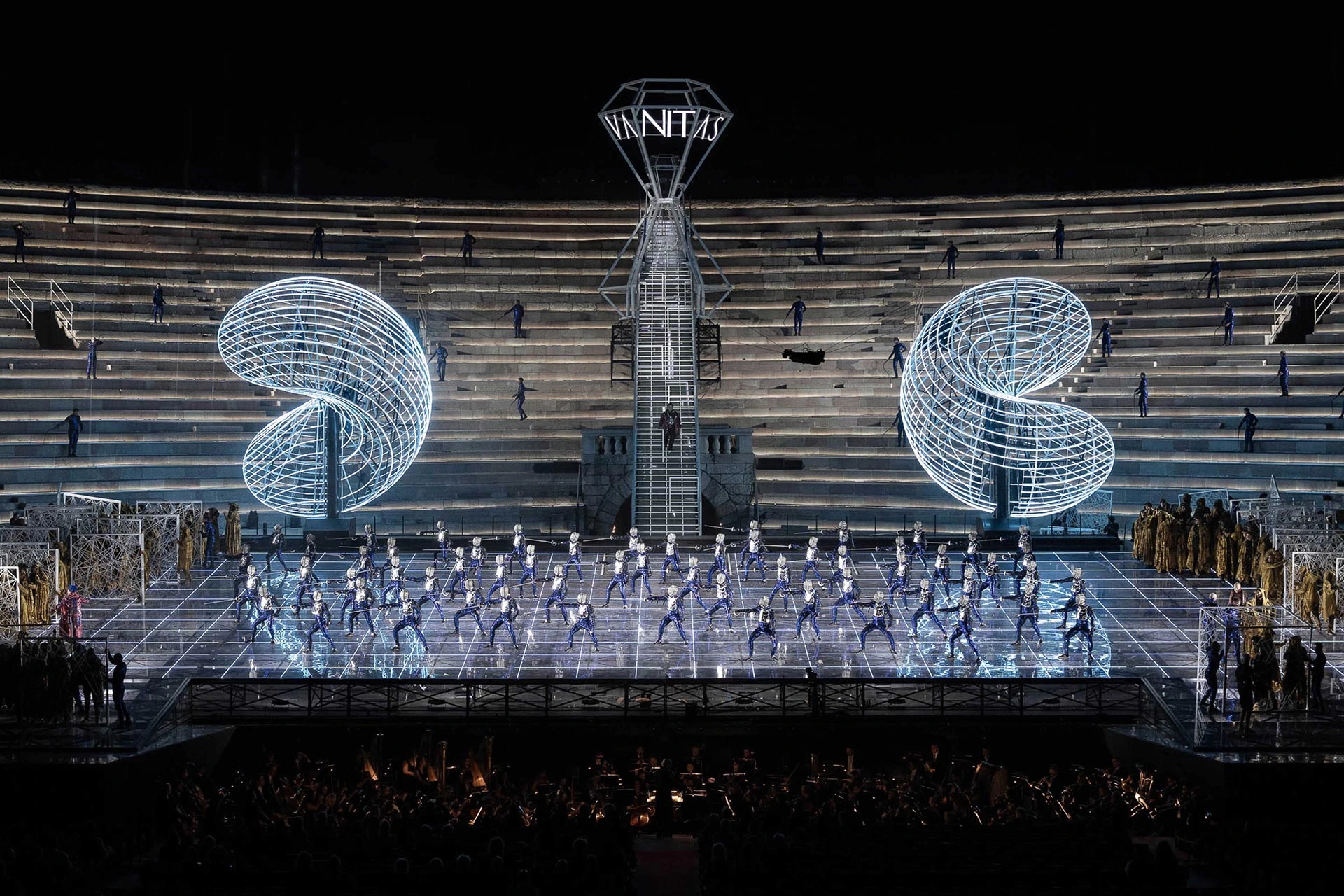
Act I
Babylonian soldiers
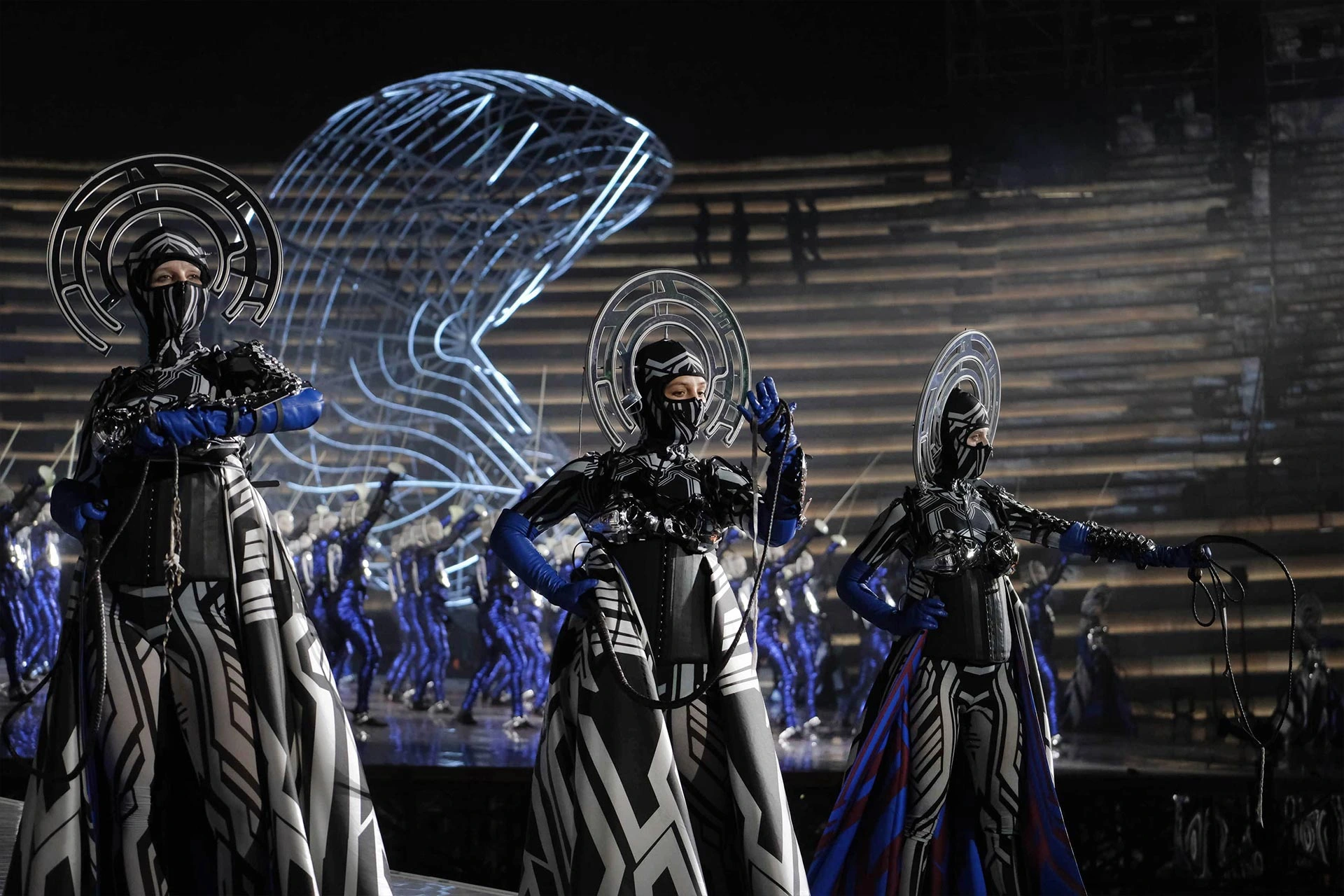
Act I
Babylonians
Act II – The Impious One
At the royal palace of Babylon, Abigaille discovers that she is really an adopted slave and that Fenena (appointed regent by Nabucco during his momentary absence) has ordered that all of the Hebrews be released. Abigaille decides to steal the throne with the backing of the high priest of Baal and the aristocracy. When Fenena converts to Judaism, the news of Nabucco’s sudden death spreads, but he reappears and proclaims himself the one and only god. A bolt of lightening strikes him, and his regal crown falls to the ground. Abigaille quickly picks it up.
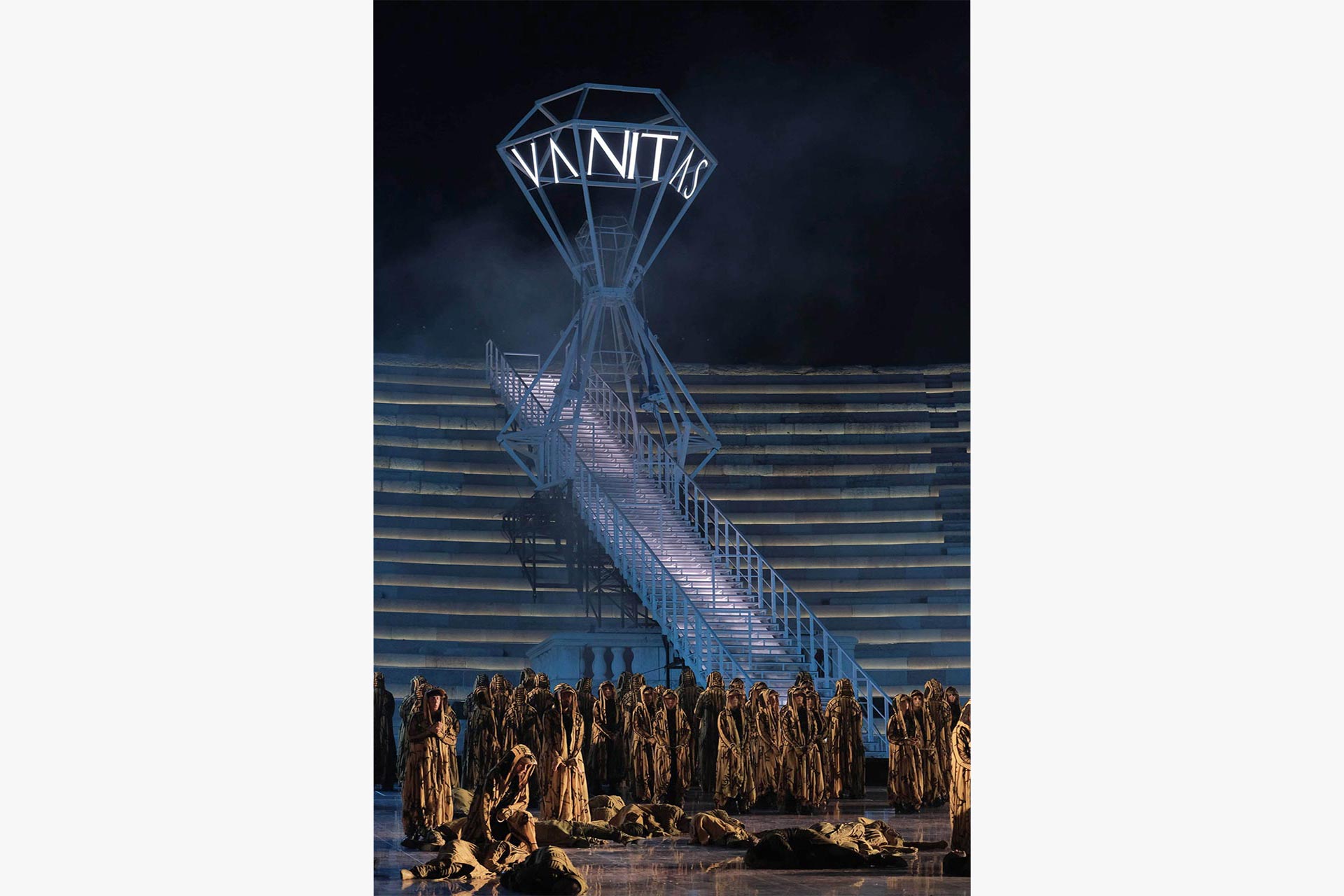
Act II
The Hebrew people
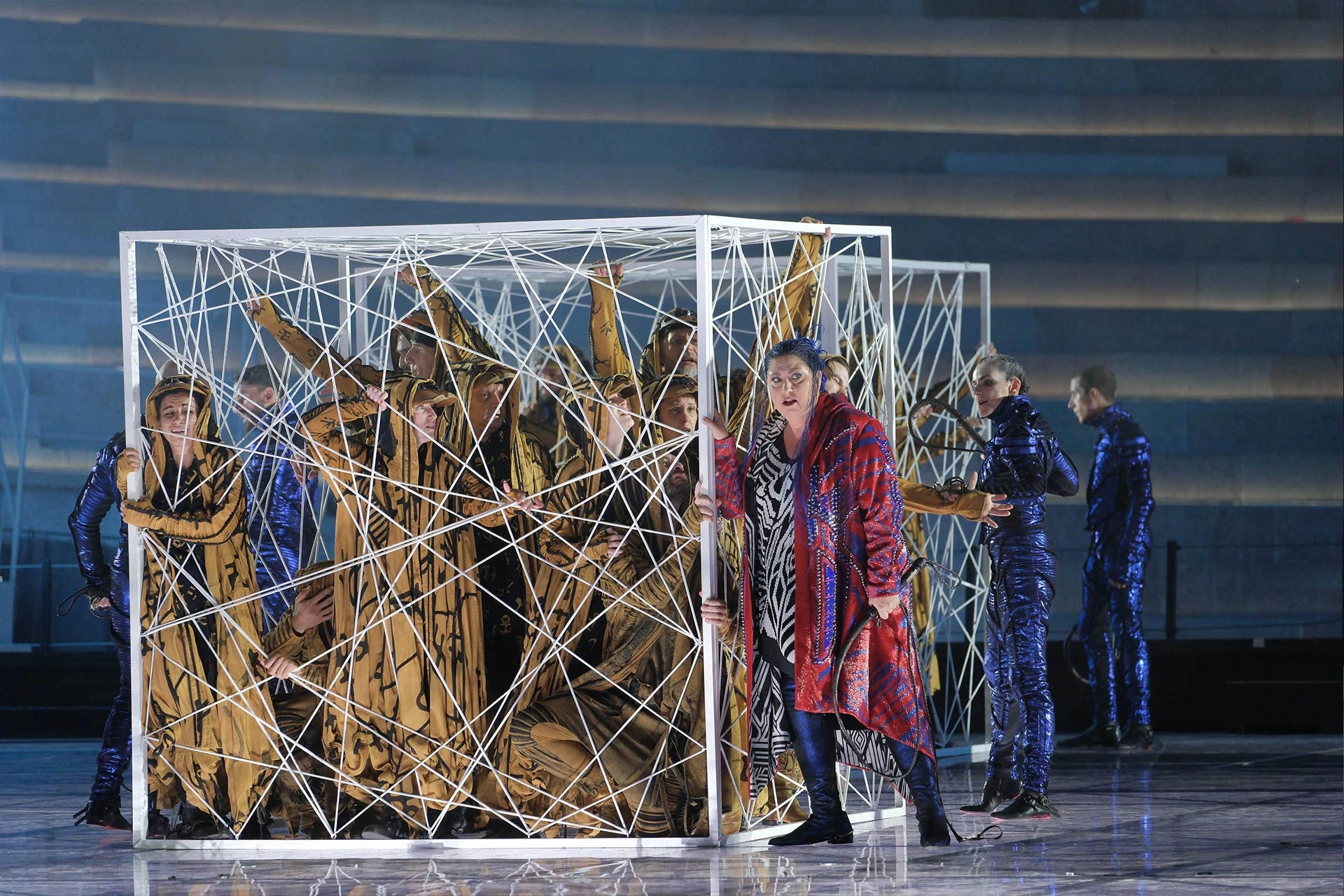
Act II
Abigaille and the Hebrew people
Act III – The Prophecy
Once she has become queen, Abigaille contrives to have Nabucco (driven insane) sign the order condemning the entire Hebrew people to death. After destroying the only document that proves she was born a slave, she orders her adoptive father arrested. In the meantime on the banks of the Euphrates, the Hebrews think longingly of their homeland. However, Zaccaria tells them not to lament, foretelling the end of their enslavement and the destruction of Babylon.
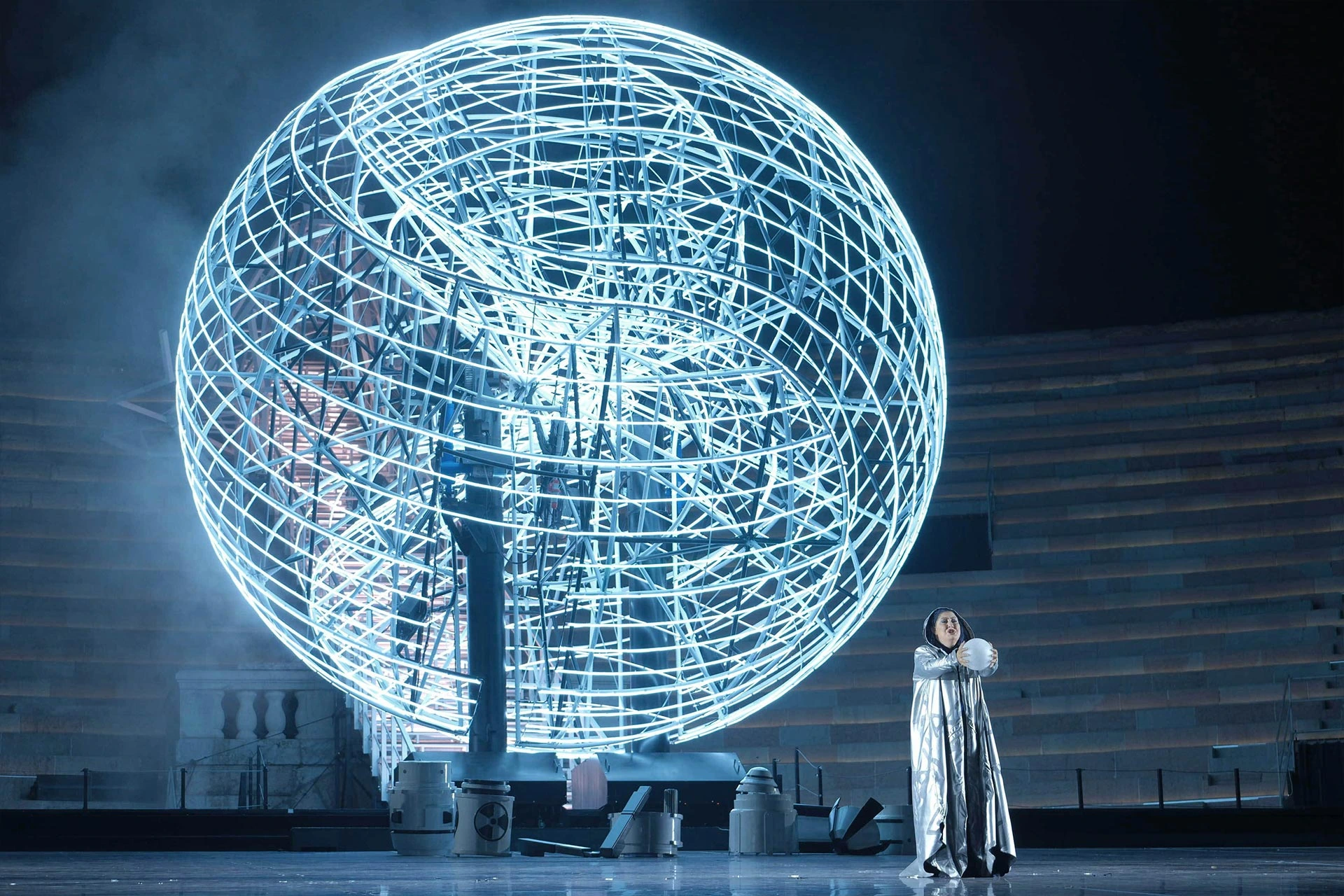
Act III
Abigaille and the globe of energy
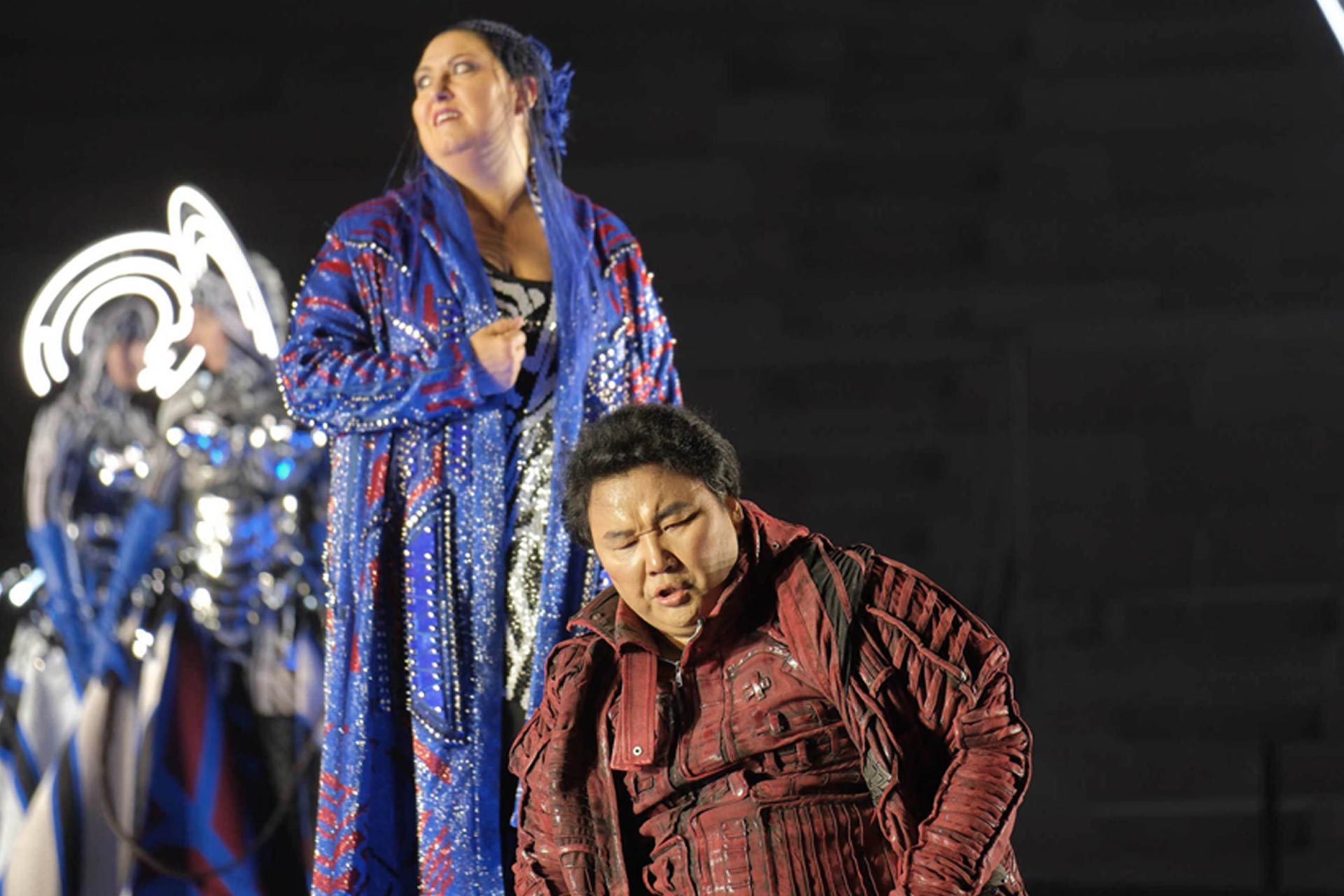
Act III
Nabucco and Abigaille
Act IV – The Shattered Idol
Tormented by nightmares and confined to his apartments, Nabucco calls upon the god of the Hebrews for help. In answer to his prayers, some of his faithful soldiers free him just in time to save Fenena from her death. The idol of Baal falls and shatters. The crowd proclaims it a miracle. Having converted, Nabucco invites the Hebrews to build a new temple and reveals that Abigaille poisoned herself. Before she dies, she asks the people and the Lord for forgiveness. Zaccaria pronounces his final prophesy – if Nabucco serves God, he will be the king of kings.
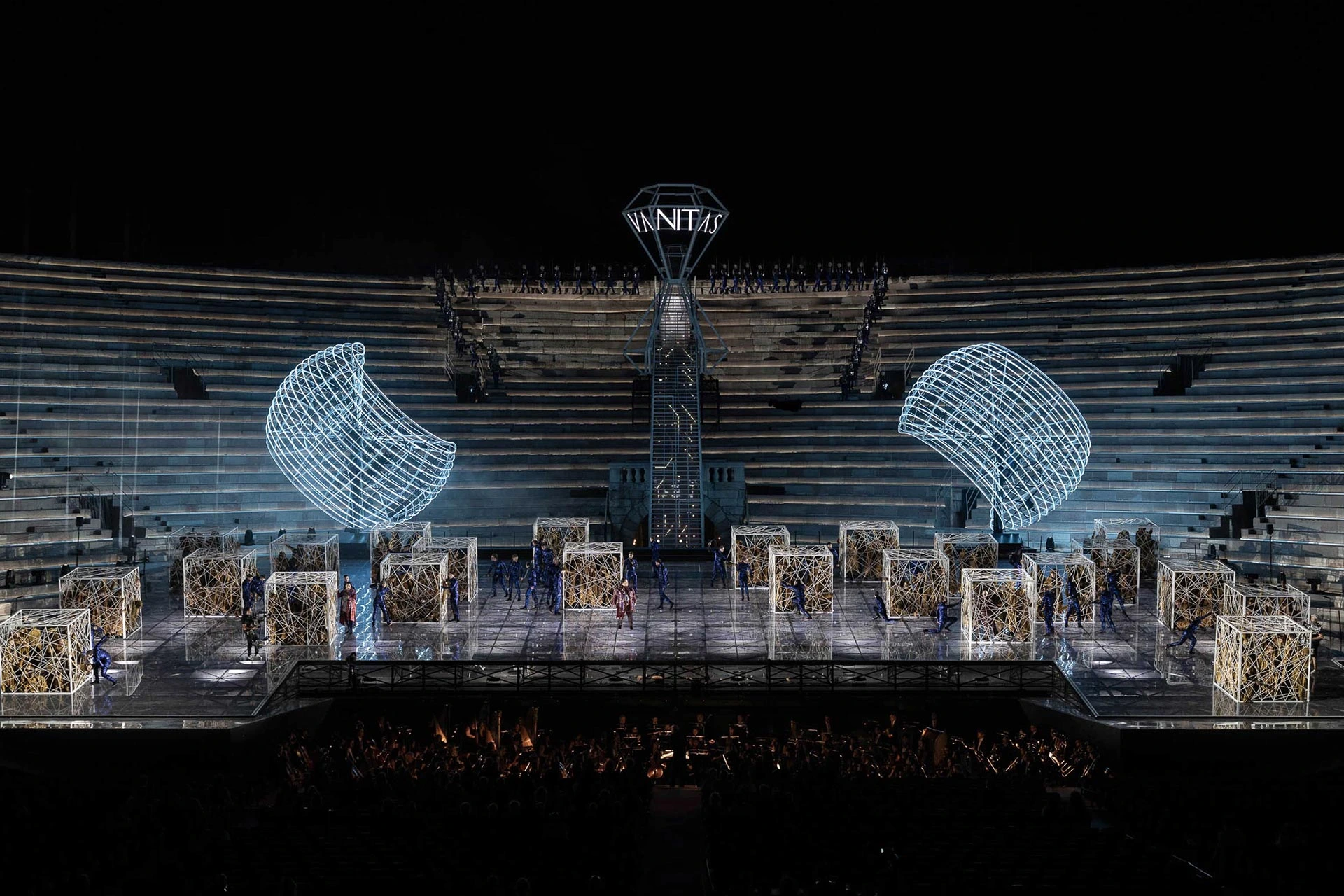
Act IV
The Hebrew prisoners and the Babylonian soldiers
Characters
Nabucco, King of Babylon [baritone]
Ismaele, Nephew of Sedecia, King of Jerusalem [tenor]
Zaccaria, High Priest of the Hebrews [bass]
Abigaille, slave, believed to be the first born daughter of Nabucco [soprano]
Fenena, daughter of Nabucco [soprano]
The High Priest of Baal [bass]
Abdallo, old officer of the King of Babylon [tenor]
Anna, sister of Zaccaria [soprano]
Babylonian soldiers, Hebrew soldiers, Levites, Wise Men, Hebrew virgins, Babylonian women, the
aristocracy of Babylon, the people.
Director’s Notes
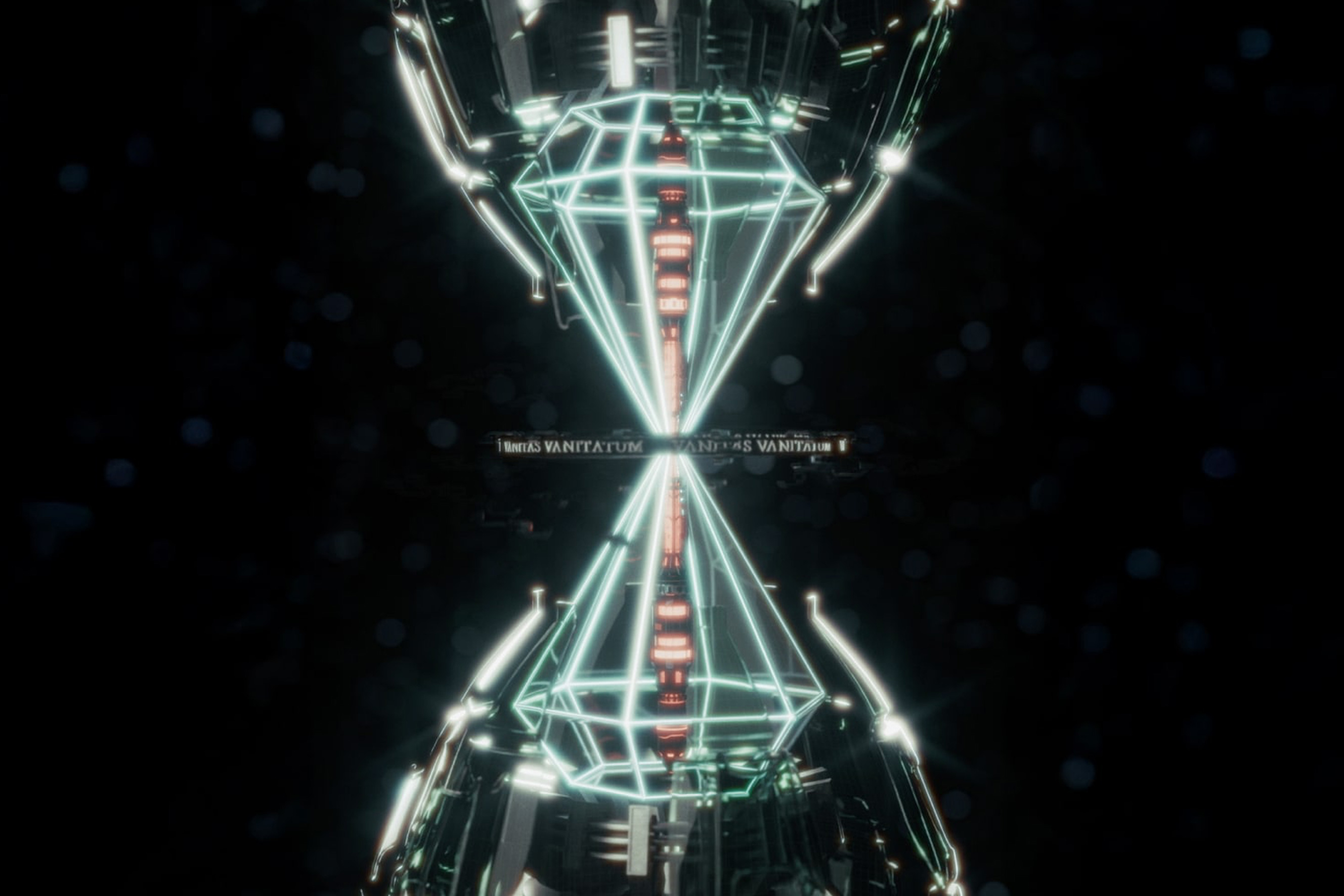
Director Stefano Poda builds a postmodern spatial dimension in which two polarities, equal and opposite, face each other, repel each other and, finally, reconcile. The stage is dominated by two half spheres, each with a nucleus that radiates luminous orbs, like a cloud of electrons. They create a labyrinth of light with the nude scenography of the Arena. The two polarities represent, on the one hand, the Babylonians (symbol of rationality and reason), and, on the other, the Hebrews (representing spirituality and faith). Between the two polarities stands an hourglass, which underlines how powerful time is with respect to all human endeavors. And yet, the chorus of the Hebrew slaves will succeed in stopping the flight of life for a brief moment by controlling the flow of the sand. Another fundamental element in this production is the shattering of the pagan idol. The large hourglass shatters and leaves humanity suspended in the choice between good and evil. Finally, the split atom is rejoined together: the two half spheres unite towards a universal dimension. Even the costumes reflect the two polarities: on the one hand, the technological world of the Babylonians; on the other, the natural world of the Hebrews. However, Nabucco’s peoples will not be imprisoned by epithets but, rather, freed to embrace their universal value so that they can truly recount the difficulties and the hopes of all peoples and every individual on Earth.
Credits
The texts and images contained in this accessible program booklet have been provided by
Fondazione Arena di Verona.
Design, planning, texts and descriptions
Elena Di Giovanni,
Francesca Raffi
(Università degli Studi di Macerata)
Technical supervision
ALI – Accessibilità Lingue Inclusione
Tecnical design, planning and digital development:
Veronica Antinucci and Federica Tarchi
Voices
Marco Quaglia (texts)
Giulia Heathfield Di Renzi (descriptions)
Videos in ISL
Daniel Bongianni
Translation
Michael James Zebrak
Disclaimer
Copyright in these pages is owned by Fondazione Arena di Verona except where otherwise
indicated by a third party's proprietary notice. These pages and the material published on
them are also protected by intellectual property laws and may not be reproduced or
appropriated in any manner without written permission of their respective owners.
For more information, please contact commerciale@arenadiverona.it