Arena di Verona
Home >  

Rigoletto  

The first of what is known as Verdi's "popular trilogy".



History

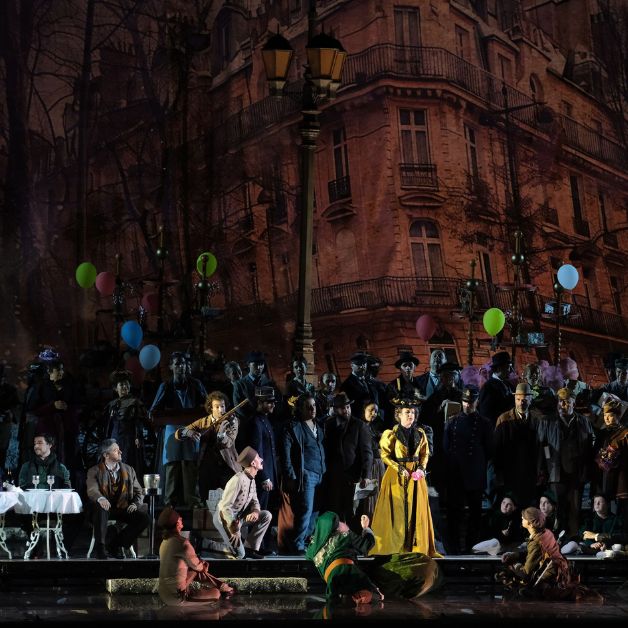
From the Drama by Victor Hugo arise the Opera about the Duke of Mantua and Rigoletto.

Verdi was commissioned to write a new opera by the theatre La Fenice, Venice in 1850, when he was already a well known composer with a certain freedom of choosing the works he would prefer. He then asked Piave (with whom he had already created Ernani, I due Foscari, Macbeth, Il Corsaro and Stiffelio) to examine the play Kean by Alexandre Dumas, père, but he felt he needed a more energetic subject to work on.

Verdi soon stumbled upon Victor Hugo's Le roi s'amuse. He later explained that "It contains extremely powerful positions ... The subject is great, immense, and has a character that is one of the most important creations of the theatre of all countries and all Ages".

It was a highly controversial subject indeed, and Hugo himself had already had trouble with censorship in France, which had banned productions of his play after its first performance nearly twenty years earlier (and would continue to ban it for another thirty years). As Austria at that time directly controlled much of Northern Italy, it came before the Austrian Board of Censors.

From the beginning, Verdi was aware of the risks as was Piave. A letter has been found in which Verdi wrote to Piave: "Use four legs, run through the town and find me an influential person who can obtain the permission for making Le Roi s'amuse." Correspondence between a prudent Piave and an already committed Verdi followed, and the two remained at risk and underestimated the power and the intentions of Austrians. Even the friendly Guglielmo Brenna, secretary of La Fenice who had promised them that they would not have problems with the censors, was in error.

At the beginning of the summer of 1850, some rumors started to spread that Austrian censorship was going to forbid the production. They considered the Hugo work to verge on lese majeste, and would never permit such a scandalous work to be performed in Venice.

In August, Verdi and Piave prudently retired to Busseto, Verdi's hometown, to continue the composition and prepare a defensive scheme. They wrote to the theatre, assuring them that the censor's doubts about the morality of the work were not justified but since very little time was left, very little could be done. The work was secretly called by the composers The Malediction (or The Curse), and this unofficial title was used by Austrian censor De Gorzkowski (who evidently had known of it from spies) to enforce, if needed, the violent letter by which he definitively denied consent to its production.

In order not to waste all their work, Piave tried to revise the libretto and was even able to pull from it another opera Il Duca di Vendome, in which the sovereign was substituted with a duke and both the hunchback and the curse disappeared. Verdi was completely against this proposed solution and preferred instead to have direct negotiations with censors, arguing over each and every point of the work.

At this point Brenna, La Fenice's secretary, showed the Austrians some letters and articles depicting the bad character but the great value of the artist, helping to mediate the dispute. In the end the parties were able to agree that the action of the opera had to be moved from the royal court of France to a duchy of France or Italy, as well as a renaming of the characters. The scene in which the sovereign retires in Gilda's bedroom would be deleted and the visit of the Duke to the Taverna was not intentional anymore, but provoked by a trick. The hunchback (originally Triboulet) became Rigoletto (from French rigolo = funny). The name of the work too was changed.

For the première, Verdi had Felice Varesi as Rigoletto, the young tenor Raffaele Mirate as the Duke, and Teresina Brambilla as Gilda (though Verdi would have preferred Teresa De Giuli Borsi). Teresina Brambilla was a well-known soprano coming from a family of singers and musicians; one of her nieces, Teresa Brambilla, was the wife of Amilcare Ponchielli.
The opening was a complete triumph, and the Duke's cynical aria, "La donna è mobile", was sung in the streets the next morning.

Due to the high risk of unauthorised copying, Verdi had demanded the maximum secrecy from all his singers and musicians. Mirate had use of his score only a few evenings before the première and was forced to swear he would not sing or even whistle the tune of "La donna è mobile".

Back


On Stage
The show is about to beginSaturday 1 June
at 21:00
in Arena
Click here 
 
 
^Top
FOLLOW US ON OUR SOCIAL NETWORKS
FacebookFlikrYou TubePinterestFoursquareArena di Verona
Major Partner
Unicredit
Automotive Partner
VOLKSWAGEN
Official Sponsor
Intimissimi
Mobility Partner
Megliointreno
Official Partner